Part 2 of 2 - continued from “The Last Inch Problem”
In Part 1, we made the case that pose estimation gets a robot to a part but has nothing to say about what happens once contact begins - and that this gap, the last inch, is where most real-world manipulation failures actually happen. This post is about the feature that closes that gap: force control, and why it looks so different from one robot platform to the next.
What force control actually means
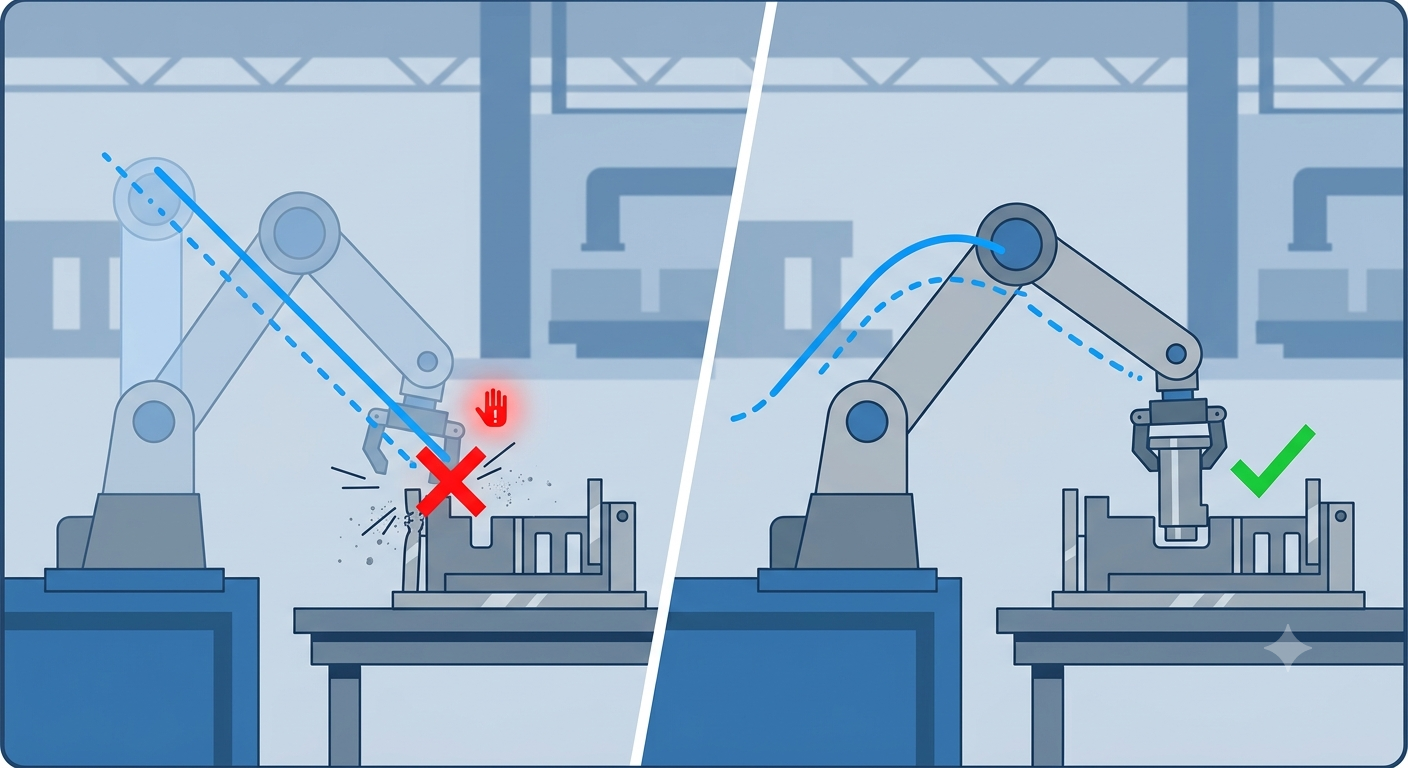
A robot with force control isn’t just executing a pre-planned trajectory and hoping it works. It’s continuously sensing resistance - through torque sensors in the joints, a force/torque sensor at the wrist, or both - and adjusting its motion in response. That lets it do things pure position control can’t:
- Stop or back off the instant it senses unexpected resistance, instead of grinding a part or fixture
- “Feel” its way into a tight-tolerance insertion, making small corrective moves as it goes rather than trusting a single computed path
- Apply a controlled amount of force (for pressing, fastening, or polishing) instead of just moving to a coordinate and hoping the contact force is safe
- Detect a collision with something unplanned and react before it becomes a hard impact
This is the difference between a robot that executes blind and one that executes with feedback - exactly the gap identified in Part 1 between “approach” and “seat.”
How it shows up across robot platforms
Flexiv builds force sensing directly into the arm - every joint carries integrated torque sensing, so the whole arm behaves like a distributed force sensor rather than relying on a single external sensor at the wrist. That’s part of why it’s a natural fit for contact-rich, adaptive tasks: the sensing isn’t bolted on, it’s structural to the robot.
Franka Emika (the Panda / FR3 line) pioneered a similar approach in the research and light-industrial space - torque sensors in every joint, designed from the ground up for compliant, force-aware manipulation rather than adapted from a rigid pick-and-place platform.
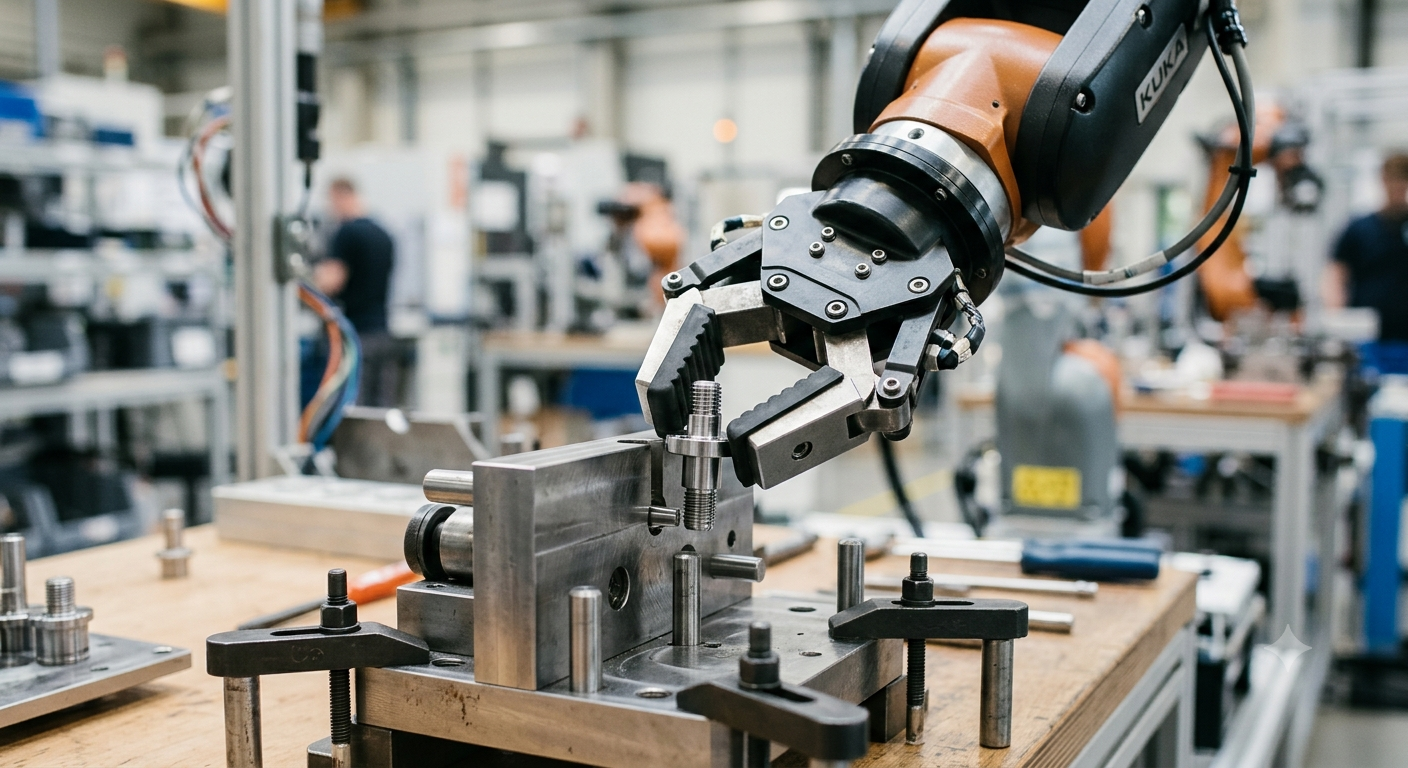
KUKA’s LBR iiwa (“sensitive robot”) is the industrial-scale version of the same idea - joint torque sensing throughout the arm, originally built for safe human-robot collaboration, which turns out to be the same sensing foundation contact-rich manipulation needs.
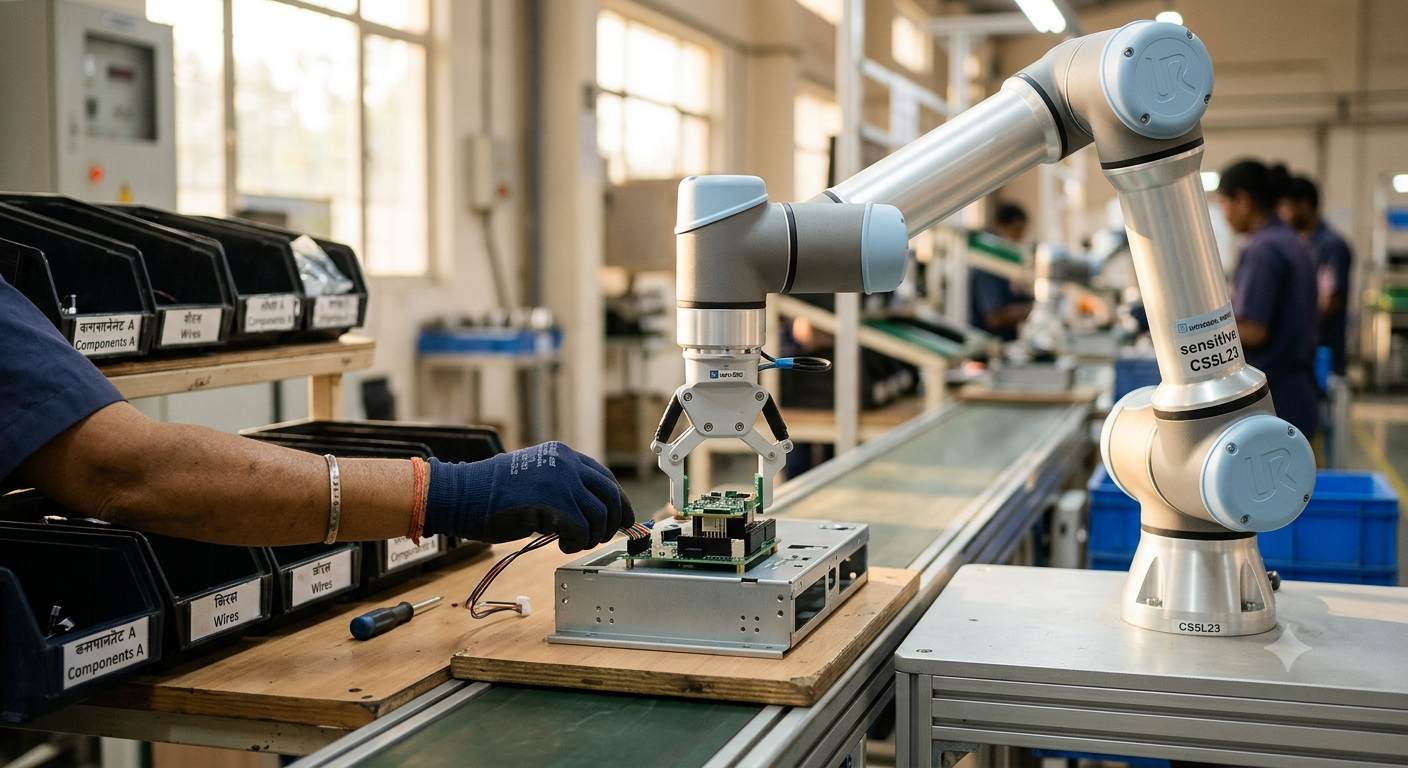
Universal Robots takes a different approach: rather than torque sensing in every joint, the e-Series adds a force/torque sensor at the tool flange (the wrist), giving force feedback at the point of contact without redesigning the whole arm. It’s a lighter-weight way to get much of the same benefit.
ABB and Doosan both offer force control as an add-on package or built-in option on select lines - usually a wrist-mounted force/torque sensor paired with software for force-controlled assembly, deburring, or polishing tasks.
The common thread: the robots that handle contact-rich work well are the ones where force sensing is either structural (every joint) or deliberately placed at the point of contact (the wrist) - not an afterthought.
Closing the loop with Part 1
Go back to the four things Part 1 said the last inch needs: force-aware execution, verification, a rigorous retract-and-complete path, and failure attribution. Force control is the sensing layer that makes the first two possible at all - you can’t verify contact-based success, and you can’t adjust to resistance in real time, without a robot that can feel what it’s touching. The other two (retract path rigor, failure attribution) are software discipline built on top of that sensing.
Which is really the point of splitting this into two posts: pose estimation and force control are solving two different halves of the same problem - where the object is, and what to do once you’re touching it - and a platform only really “finishes the job” when it treats both as first-class, not one as the headline feature and the other as an afterthought.