Blog
Ideas worth understanding.
Stories, deep dives, and insights from the team building spatial intelligence for the physical world.

Spatia robotics
· ~4-5 min readThis AI Watched One Human Video and Suddenly Knew How to Use Its Hands
Every robot deployed today lives with the same limitation: it only knows what it was trained on. Change the object, change the lighting, change the task slightly, and performance can fall apart. The traditional fix - collect more data, retrain, redeploy - doesn't scale to the messiness of the real world.
Spatia robotics
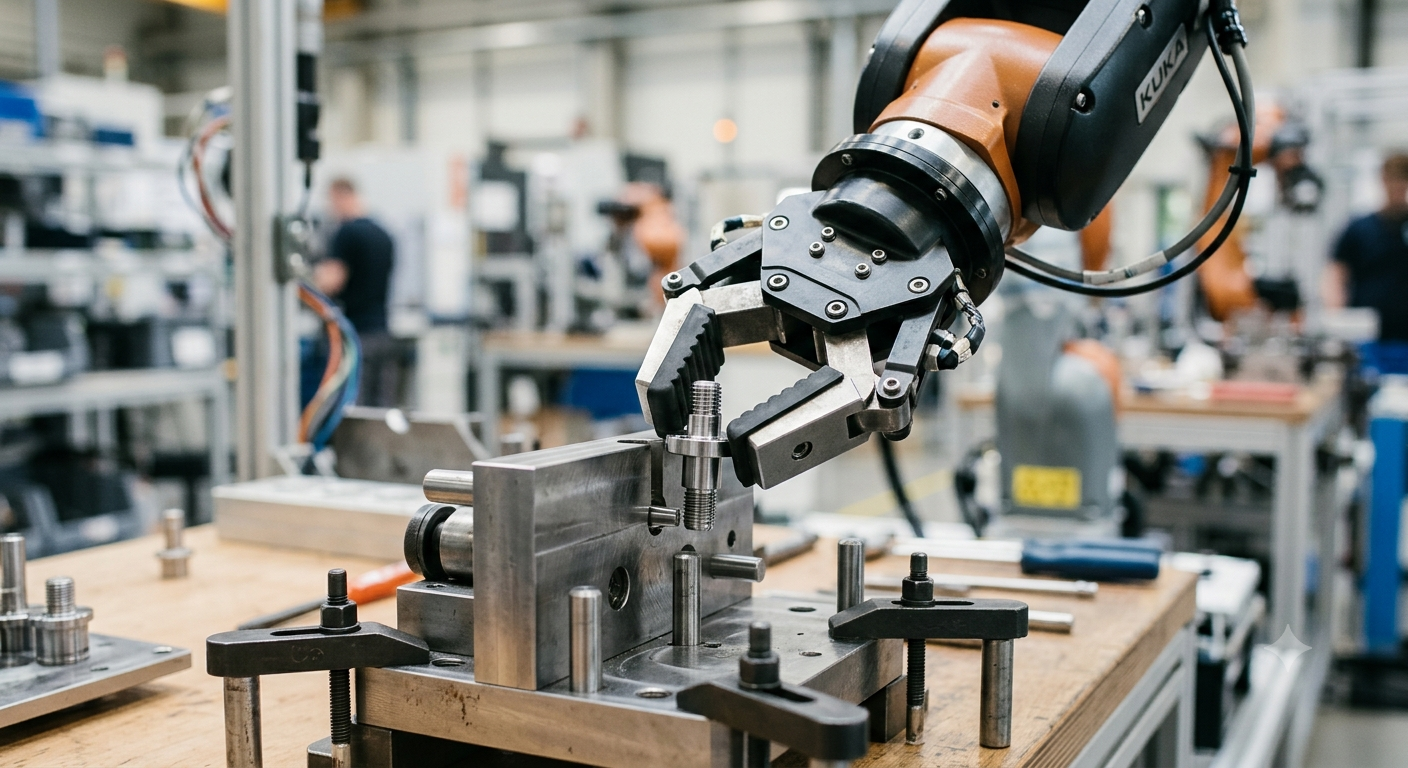
· ~5 min readForce Control: The Feature That Actually Solves the Last Inch
Pose estimation gets a robot to the part - force control is what lets it feel what happens next. This post breaks down how Flexiv, Franka Emika, KUKA, Universal Robots, and ABB/Doosan each implement force sensing, and why that sensing is the missing half of the last-inch problem.
Deep Dive
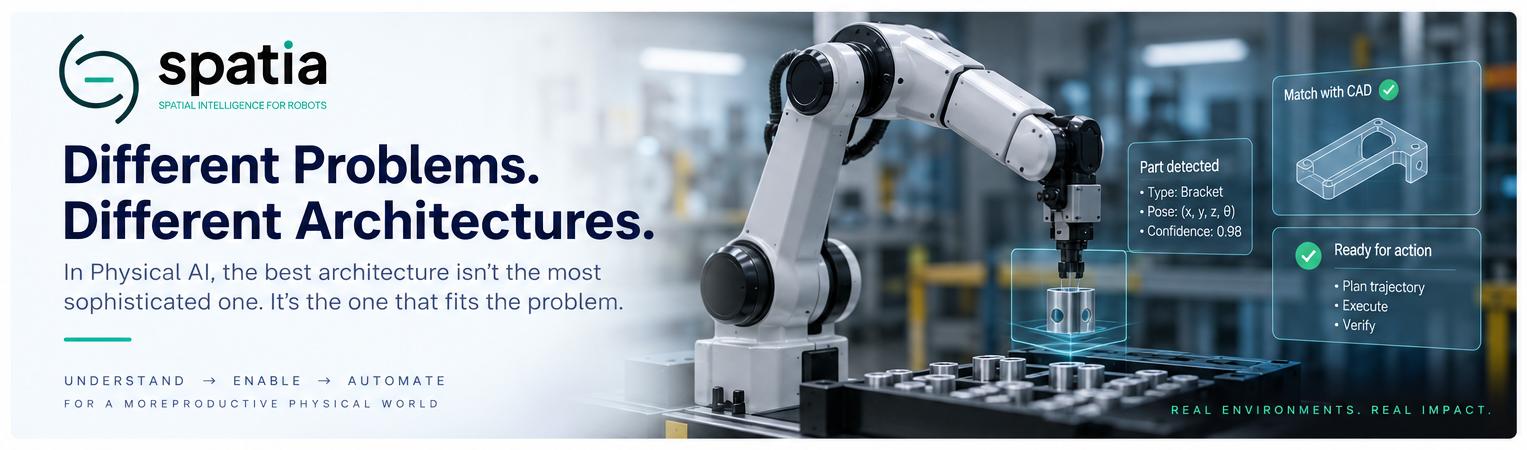
· 6 min readWhy We Didn’t Build on a VLA (And When You Actually Should)
In Physical AI, the best architecture isn't always the most sophisticated one. This article explains why Spatia chose a modular approach for industrial robotics instead of building around a VLA, and when a VLA architecture can actually be the better choice.
Spatia robotics
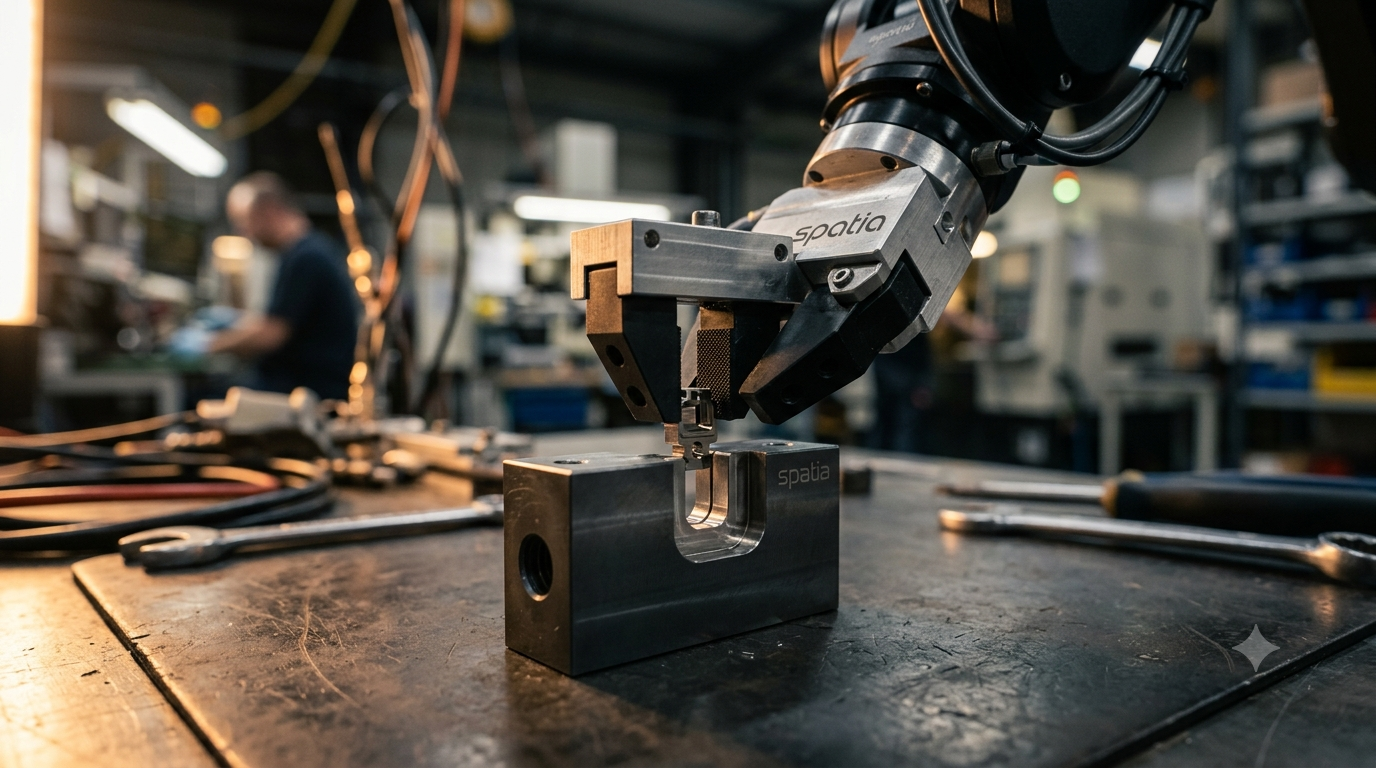
· 6 min readThe Robot Found the Part. Now What?
Why the hardest part of industrial automation starts after perception.
Spatia robotics
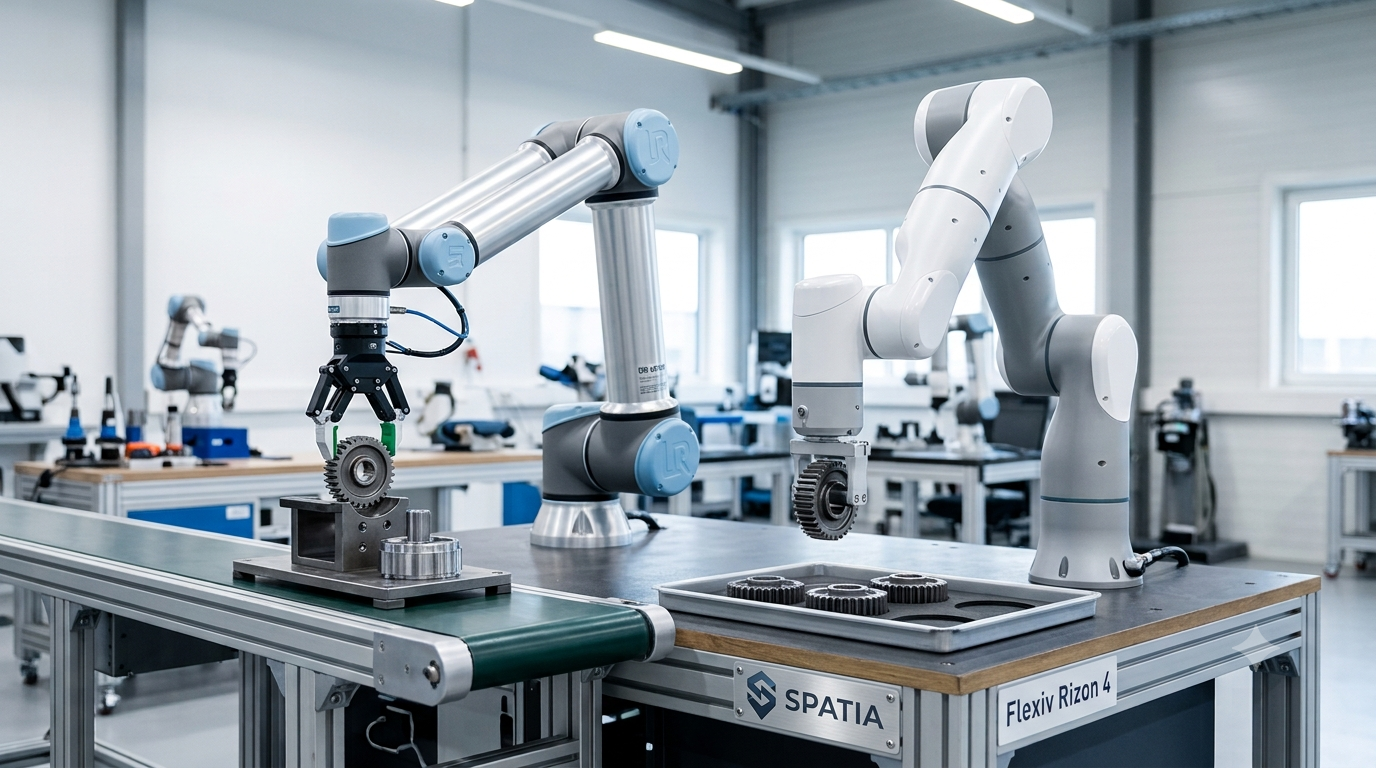
· 7 minsWhat Happens When Your Second Robot Doesn't Speak the Same Language?
One Perception Engine, Any Robot: The Case for a Robot-Agnostic Abstraction Layer

Robotics
· 8Zero-Shot 6D Pose Estimation: The End of the Re-Teach Tax?
A new part used to mean a new perception problem — collect data, label, train, validate, tune, deploy. Then do it again when the SKU changes. That workflow is starting to break.

Behind the Work
· 8 min readBeyond Perception: Building Machines That Understand the World
Autonomous systems don't operate in static environments. They must continuously interpret change, understand context, and make decisions in the physical world. This is how we think about building intelligence that goes beyond perception.

Industry
· 7 min readPhysical AI in Warehouses
How autonomous systems are transforming warehouse operations and why spatial understanding is the key to making it work at scale.

Behind the Work
· 8 min readInside The System
A closer look at how we design, build, and refine intelligent systems that perceive, reason, and act in the real world.

Shared Ideas
· 5 min readConversations
We bring together people who ask better questions, challenge assumptions, and believe that understanding is the first step toward building what matters.
Stay informed
Want to learn more about
spatial intelligence?
Follow our work as we build systems that help machines understand the world around them.
Get in touch