Part 1 of 2
Ask most people what the hard part of robotic automation is, and they’ll say “finding the object.” Get a camera to see the part, figure out where it is in 3D space, and the robot can just… grab it. Done.
It isn’t done. Finding the part is the first inch of a job that might be twelve inches long, and the last inch is where most industrial deployments actually live or die.
Pose estimation solves a real problem - just not the whole problem
Zero-shot 6D pose estimation from CAD is a genuine unlock. Upload a model, and a robot can locate that part in a bin, on a conveyor, or in a fixture without a single labeled image or a week of retraining. That eliminates a huge amount of the changeover cost that used to make robotic automation impractical for anything but high-volume, unchanging production.
But locating a part is a perception problem. Manufacturing is not a perception problem - it’s a manipulation problem wearing a perception problem’s clothes. Once the robot knows where the part is, it still has to:
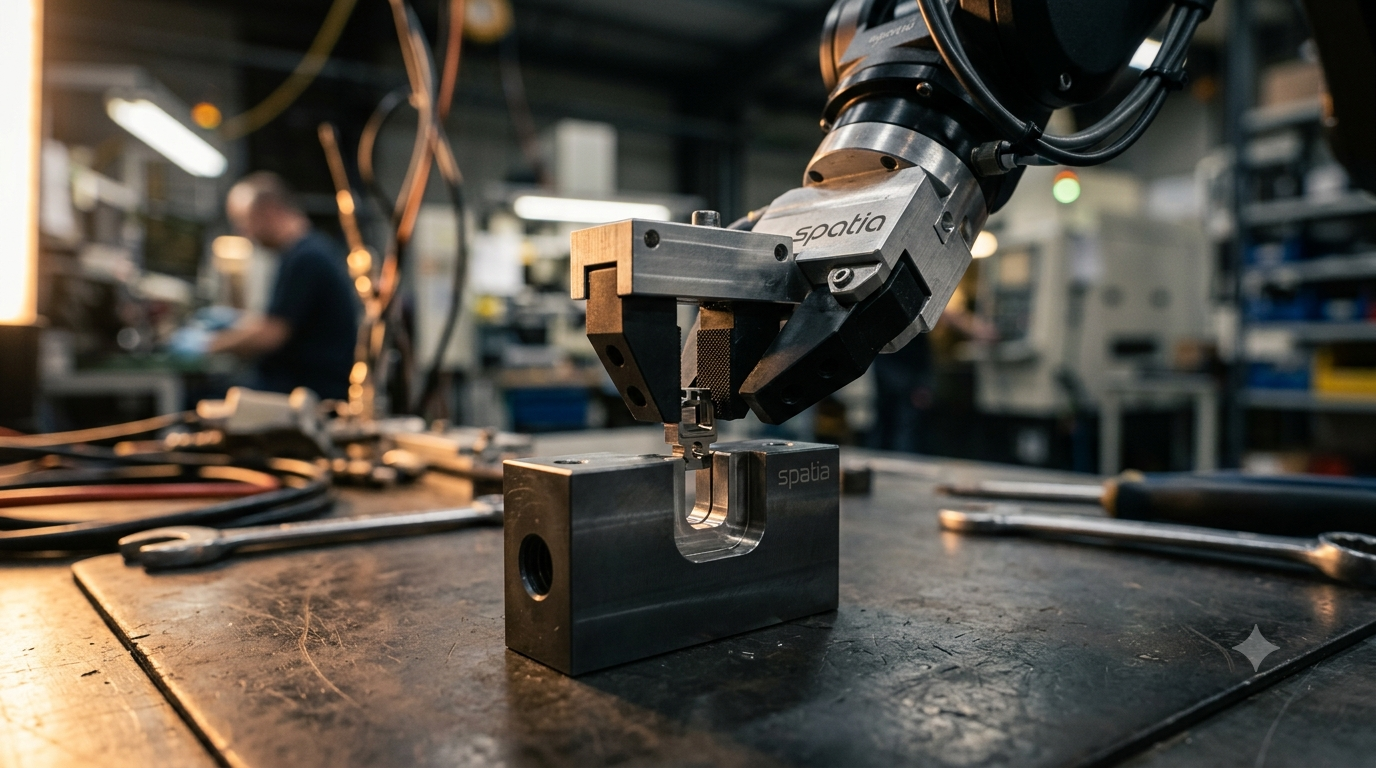
- Insert it into a fixture with sub-millimeter alignment
- Apply a fastener at the correct torque and angle
- Seat a connector that only mates one way
- Correct for the part shifting slightly the instant the gripper makes contact
None of that is “finding.” All of it is what happens in the last inch of travel, after the pose is already known.
Why the last inch is disproportionately hard
Tolerances tighten as the robot gets closer to the target. A pose estimate that’s accurate to a couple of millimeters is more than good enough to approach a part. It is not good enough to seat that part into a fixture with a 0.2mm clearance. The margin for error shrinks exactly when the consequences of error grow - a bad approach just means a retry; a bad insertion can damage the part, the fixture, or the end effector.
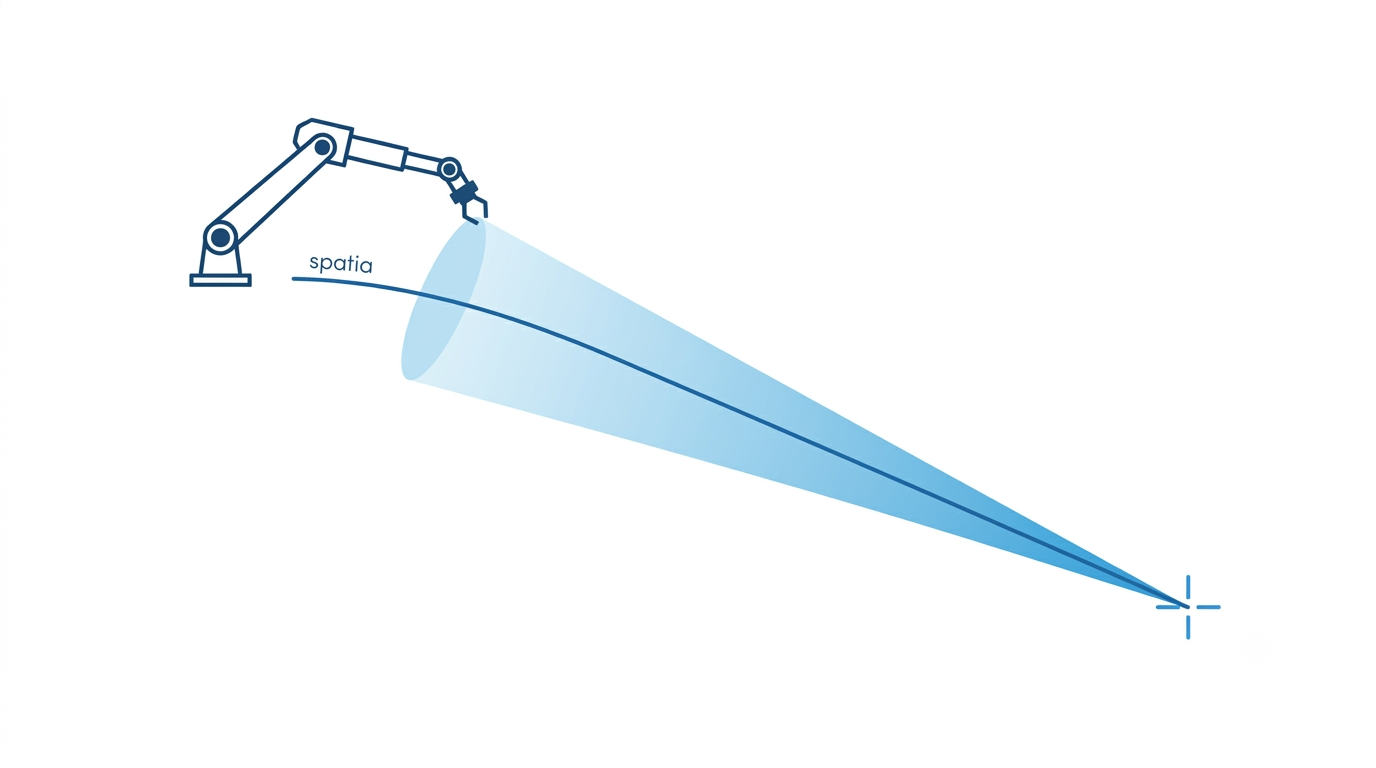
Contact changes the physics. The moment the gripper touches the part, you’ve left the world of pure vision and entered a world of forces, compliance, and small unplanned movements. A part that looked perfectly positioned a second ago can shift the instant it’s grasped or pressed into place. Pose estimation, on its own, has nothing to say about that - it’s a snapshot, not a feedback loop for contact.
It’s where automation quietly fails today. In many real deployments, the problem isn’t that the robot couldn’t find the part. It’s that the robot couldn’t reliably finish the task once contact began.The part was found correctly. It just wasn’t finished correctly.
Solving the last inch is an architecture problem, not a bigger model
The instinct is often to reach for a fancier perception model. That’s the wrong axis. The last inch needs:
Force-aware execution, not just visual accuracy - the ability to sense resistance during insertion and adjust in real time, rather than executing a single blind trajectory computed before contact. This is a big enough topic on its own that it gets the full follow-up post - see Part 2 below.
Verification, not assumption - confirming an action actually succeeded (the fastener seated, the part is flush, the connector clicked) instead of trusting that a planned motion produced the intended outcome.
A retract-and-complete path with the same rigor as the approach path - the motion planning discipline applied to getting to the part has to be applied equally to placing it, including collision-aware retraction that doesn’t clip the bin, the fixture, or a neighboring part on the way out.
Failure attribution - when something does go wrong in that last inch, the system needs to say why: was it a calibration drift, an occluded view, a grasp offset, or an unexpected part shift on contact? A system that can only say “it failed” without saying where forces every failure to be debugged as a mystery instead of a known category.
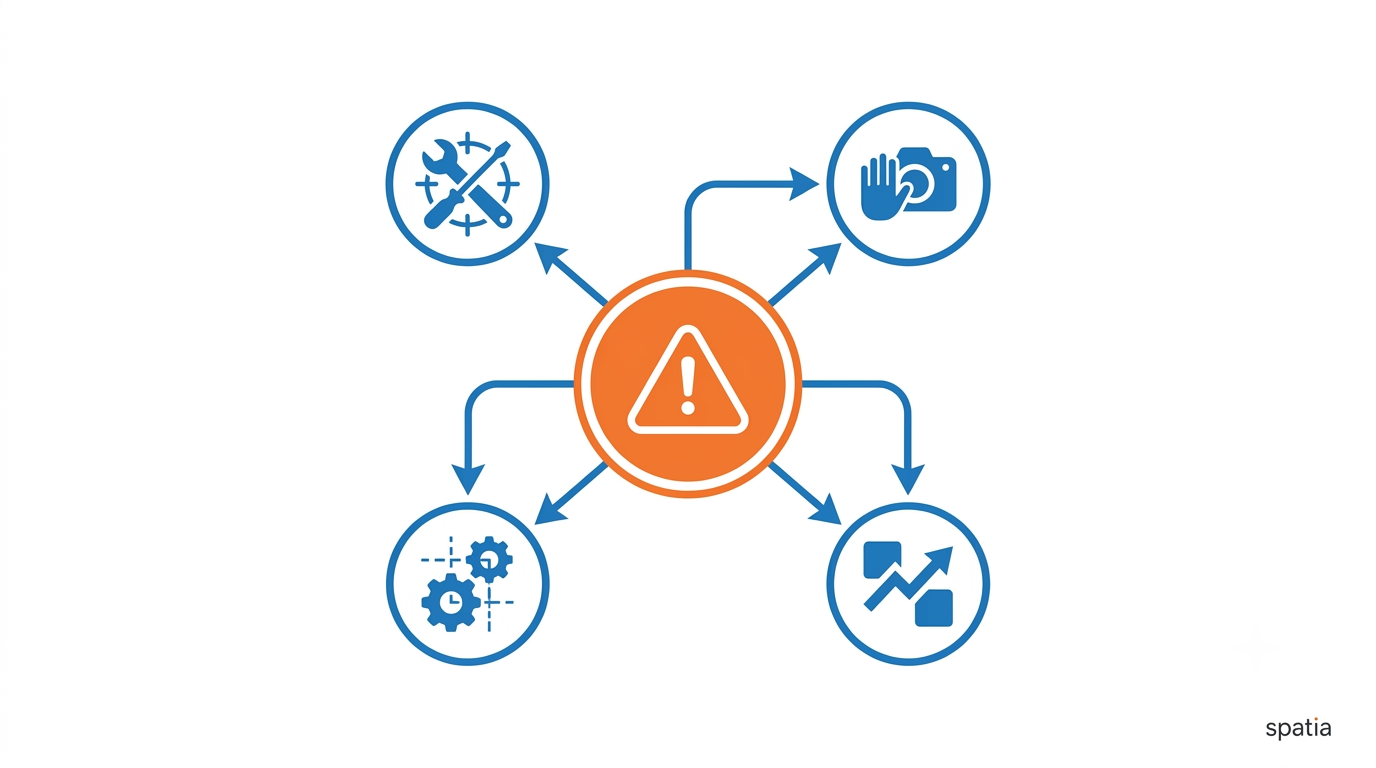
This is why “the last inch” belongs on the list of things a serious industrial automation platform has to own, not outsource to hope. Finding an object is a necessary condition for automation. It was never a sufficient one.
The real measure of a manipulation platform
The honest test of a pick-and-place, fastening, dispensing, or bin-picking system isn’t “can it locate the part.” For many structured industrial environments, locating the part is no longer the most interesting question. The test is: what happens in the half-second after the gripper makes contact? Does the system have any awareness of what actually happened, or is it just trusting a trajectory that was planned before it knew what the world would do?
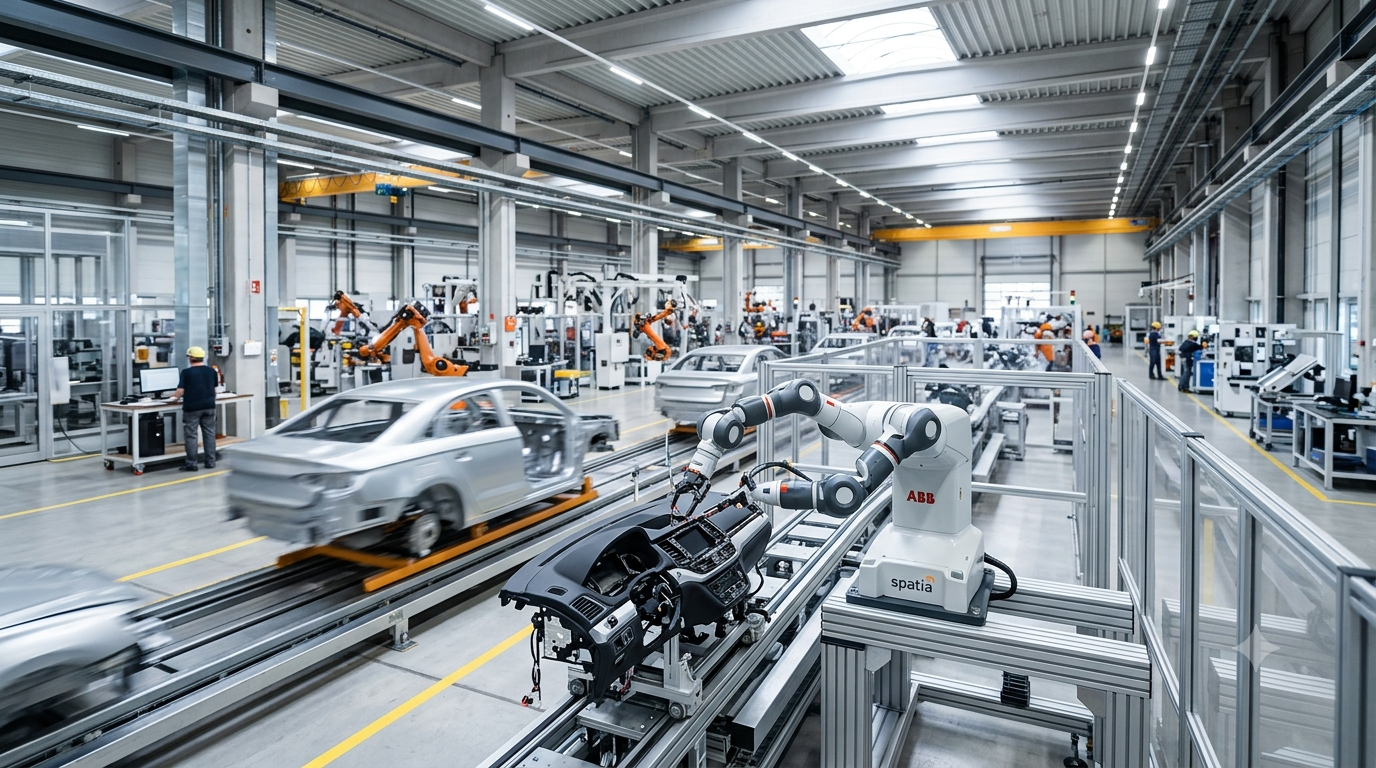
Perception gets the robot to the doorway. What happens in the last inch decides whether it actually walks through - and the single biggest factor in that last inch is whether the robot can feel what it’s doing. That’s the subject of Part 2: force control, and why it varies so much from one robot platform to the next.