Reality doesn't stay still.
Why physical AI systems must be designed for the infinite edge case

Prabakaran
5 years at Spatia
Author's Perspective
One engineering lesson has followed me through every project I've worked on: divide and conquer. No matter how large the problem feels, break it into smaller pieces. Solve one piece. Then the next. Simple in theory but reality has a habit of introducing problems nobody planned for.
Engineering isn't about using the newest technology. It's about solving problems. Sometimes the simplest solution creates the biggest impact.
Every engineering team knows this feeling. The design looks good. The architecture makes sense. The tests pass. The demo works. Then the system meets the real world. A process changes. Equipment moves. A new requirement appears. Someone uses the system in a way nobody expected. Suddenly the challenge isn't building something that works it's building something that keeps working.
I've seen projects that looked incredible during planning. One in particular felt like a breakthrough. The idea was strong. The technology was exciting. Everything pointed in the right direction. Then reality slowly pulled it apart. The team drifted from the original vision. The focus shifted toward technology decisions instead of customer problems. We started solving for sophistication instead of simplicity. Eventually the project dissolved. That experience stayed with me because engineering isn't about using the newest technology. It's about solving problems.
Divide & Conquer
Break large systems into smaller, verifiable problems. Composability is the foundation of reliable physical AI.
Iterate Continuously
Real systems evolve every day. Ship fast, observe reality, refine the model. The loop never ends.
Understand Reality
Build for the real world, not the benchmark. The physical environment is the test suite that matters.
“The challenge isn't helping machines perform well in controlled conditions. The challenge is helping them continue performing when conditions stop being controlled.”
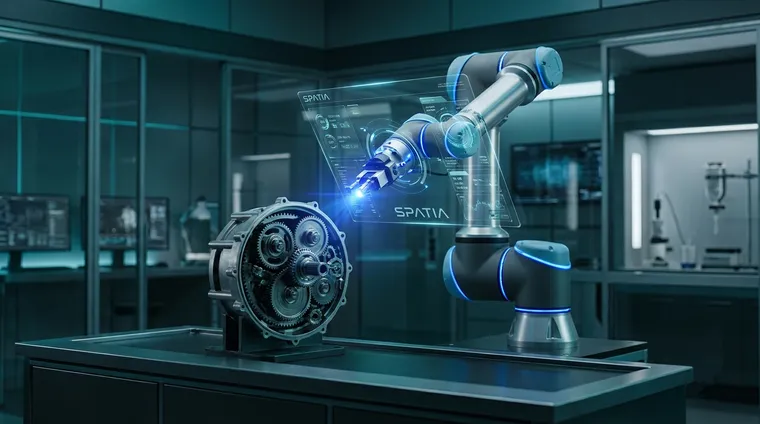
Spatial intelligence deployed in real industrial environments.
People often assume engineering is about complexity. I've never seen it that way. Good engineering reduces complexity. It removes friction. It minimizes effort. It helps people accomplish something more effectively than they could before. Finding that simplicity is usually the hardest part. That's where the craft lives.
That's also why Physical AI is interesting to me. The environments these systems operate in are constantly changing. Warehouses change. Factories change. People move. Objects move. The world doesn't pause so a machine can catch up. The challenge isn't helping machines perform well in controlled conditions the challenge is helping them continue performing when conditions stop being controlled. That's a very different problem, and it becomes more important as autonomous systems move into the real world.
Engineering gets interesting when you solve a problem you've experienced yourself. Because experience creates understanding. And understanding usually leads to better solutions. The same idea applies to autonomous systems. Seeing the world isn't enough. The machine has to understand it. And that understanding has to evolve as the world changes around it. Because reality doesn't stay still.
Share this article

Prabakaran
LinkedInVP Engineering · 5 years at Spatia
Prabakaran leads engineering at Spatia, overseeing the development of spatial intelligence systems deployed across logistics, manufacturing, and defense environments. He has spent his career at the intersection of robotics, computer vision, and real-time systems.



More engineering
perspectives.
Thoughtful essays from the people building intelligent machines. Delivered monthly, no fluff.
No spam. Unsubscribe any time.
Ready to build
Physical AI?
We're looking for engineers, researchers, and builders who want to work on some of the hardest problems in autonomous systems.
Explore Opportunities