Every breakthrough becomes ordinary.
Why the technologies that matter most eventually disappear into everyday life

Pooja
3 years at Spatia
Author's Perspective
I've always been more interested in people than technology. Not because technology isn't important but because people decide whether technology matters. History is full of breakthroughs that felt impossible before becoming completely normal.
The technologies that matter most eventually become invisible. They become infrastructure. They become assumptions. They become part of how the world works.
The internet changed how the world communicates. Smartphones changed how people access information. Today, most of us barely think about either. The technologies that reshape society rarely stay remarkable for long they become ordinary. That's what makes them successful. The technologies that matter most eventually become invisible.
When people talk about Physical AI today, they often focus on the machines themselves. The robots. The demonstrations. The capabilities. That's natural it's what happens whenever a new technology emerges. But the more interesting question is what happens next. What happens when robots stop being interesting? What happens when they become expected?
Divide & Conquer
Break large systems into smaller, verifiable problems. Composability is the foundation of reliable physical AI.
Iterate Continuously
Real systems evolve every day. Ship fast, observe reality, refine the model. The loop never ends.
Understand Reality
Build for the real world, not the benchmark. The physical environment is the test suite that matters.
“That's the pattern history keeps repeating. The technologies that matter most eventually become invisible. That's usually how you know a breakthrough succeeded.”
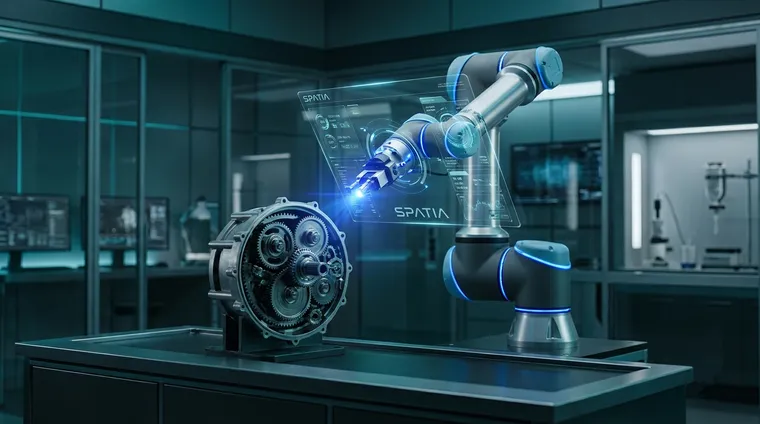
Spatial intelligence deployed in real industrial environments.
I think we're moving toward a future where intelligent machines become part of everyday life in much the same way the internet became part of everyday life. Not because people suddenly become obsessed with robots the opposite. Because they stop thinking about them entirely. The technology fades into the background. The value remains. That's the pattern history keeps repeating.
What excites me most about Physical AI isn't the technology itself. It's what people get back because of it. Time. Energy. Attention. The opportunity to focus on more human things creativity, craft, art, exploration, connection. The work only people can do. If intelligent machines can take on repetitive physical work, people gain the freedom to spend more time being human.
Physical AI will be one of the most difficult problems to solve. It may also become one of the most important. And like every important technology before it, one day it may feel completely ordinary. That's usually how you know a breakthrough succeeded.
Share this article

Pooja
LinkedInGrowth · 3 years at Spatia
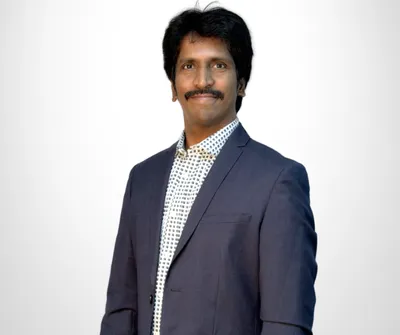
Pooja leads Growth at Spatia, working with enterprise partners across logistics, defense, and manufacturing to deploy spatial intelligence at scale. She focuses on the human side of AI adoption how people decide whether a technology truly matters.


More engineering
perspectives.
Thoughtful essays from the people building intelligent machines. Delivered monthly, no fluff.
No spam. Unsubscribe any time.
Ready to build
Physical AI?
We're looking for engineers, researchers, and builders who want to work on some of the hardest problems in autonomous systems.
Explore Opportunities