Most failures begin with assumptions.
How intent-modelling replaced path-planning as Spatia's core paradigm

Surendran
6 years at Spatia
Author's Perspective
Most failures begin with assumptions. We've all seen robots before but what we're seeing today feels fundamentally different. We're entering the era of Physical AI, and the question that matters isn't what a robot can do. It's whether it actually understands the world it's moving through.
More information doesn't automatically create understanding. A camera can see an object. That doesn't mean the machine understands what the object means.
Many of us grew up watching movies where robots could do almost everything a human could: I, Robot, The Terminator, Wall-E. Outside of movies, I've spent years seeing robots in manufacturing facilities, warehouses, and airports. They've been around for a long time. But what we're seeing today feels different. We're entering the era of Physical AI.
When I talk about robots, I'm not only talking about humanoids. A robot could be a six-axis arm on a factory floor. It could be a mobile platform moving through a warehouse. It could be any machine capable of interacting with the physical world. What matters is the intelligence behind it. For nearly two decades, we've been building software systems and that experience taught us an important lesson: intelligence isn't just about collecting information. It's about understanding it.
Divide & Conquer
Break large systems into smaller, verifiable problems. Composability is the foundation of reliable physical AI.
Iterate Continuously
Real systems evolve every day. Ship fast, observe reality, refine the model. The loop never ends.
Understand Reality
Build for the real world, not the benchmark. The physical environment is the test suite that matters.
“The challenge isn't simply helping machines see the world. It's helping them understand the world as it changes around them.”
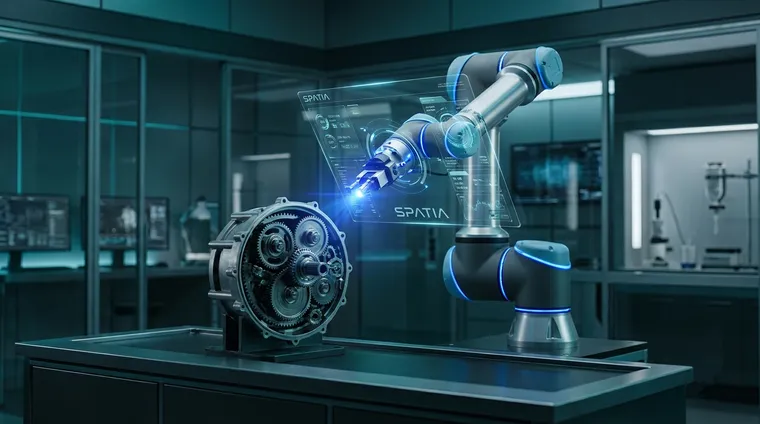
Spatial intelligence deployed in real industrial environments.
One of the easiest ways to make a robot look intelligent is to place it in an environment that never changes. The route stays the same. The objects stay where they are. The conditions remain predictable. In those environments, robots can perform extremely well. The challenge begins when reality changes. A pallet gets moved. A person walks into the workspace. An object appears where it wasn't expected. A path becomes blocked. Suddenly, the assumptions the machine was relying on are no longer true. That's where many systems struggle.
People often think autonomy is a sensing problem. Add more cameras. Add more sensors. Collect more data. Those things help, but more information doesn't automatically create understanding. A camera can see an object. That doesn't mean the machine understands what the object means, how it affects the environment, or what action should happen next. The physical world is constantly changing. Objects move. People move. Environments evolve. The machine's understanding has to evolve with them continuously. Not every few minutes. Not every few seconds. Continuously.
That's what makes Physical AI so exciting. The challenge isn't simply helping machines see the world. It's helping them understand the world as it changes around them. As intelligence moves into the physical world, robots will increasingly take on repetitive tasks in highly unstructured environments, work that today still depends heavily on people. For that future to become reality, machines need more than perception. They need understanding. And that's exactly the problem we're working on.
Share this article

Surendran
LinkedInCTO & Co-Founder · 6 years at Spatia
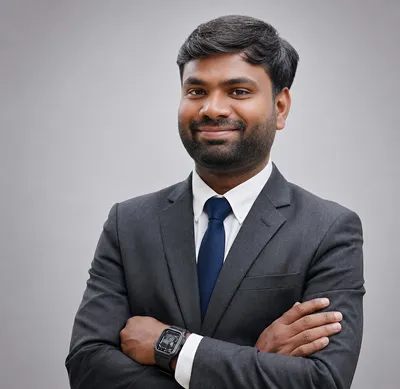
Surendran is the CTO and Co-Founder of Spatia. He architected the intent-modelling framework at the core of Spatia's spatial intelligence stack, a shift that redefined how the company thinks about autonomous navigation.


More engineering
perspectives.
Thoughtful essays from the people building intelligent machines. Delivered monthly, no fluff.
No spam. Unsubscribe any time.
Ready to build
Physical AI?
We're looking for engineers, researchers, and builders who want to work on some of the hardest problems in autonomous systems.
Explore Opportunities